
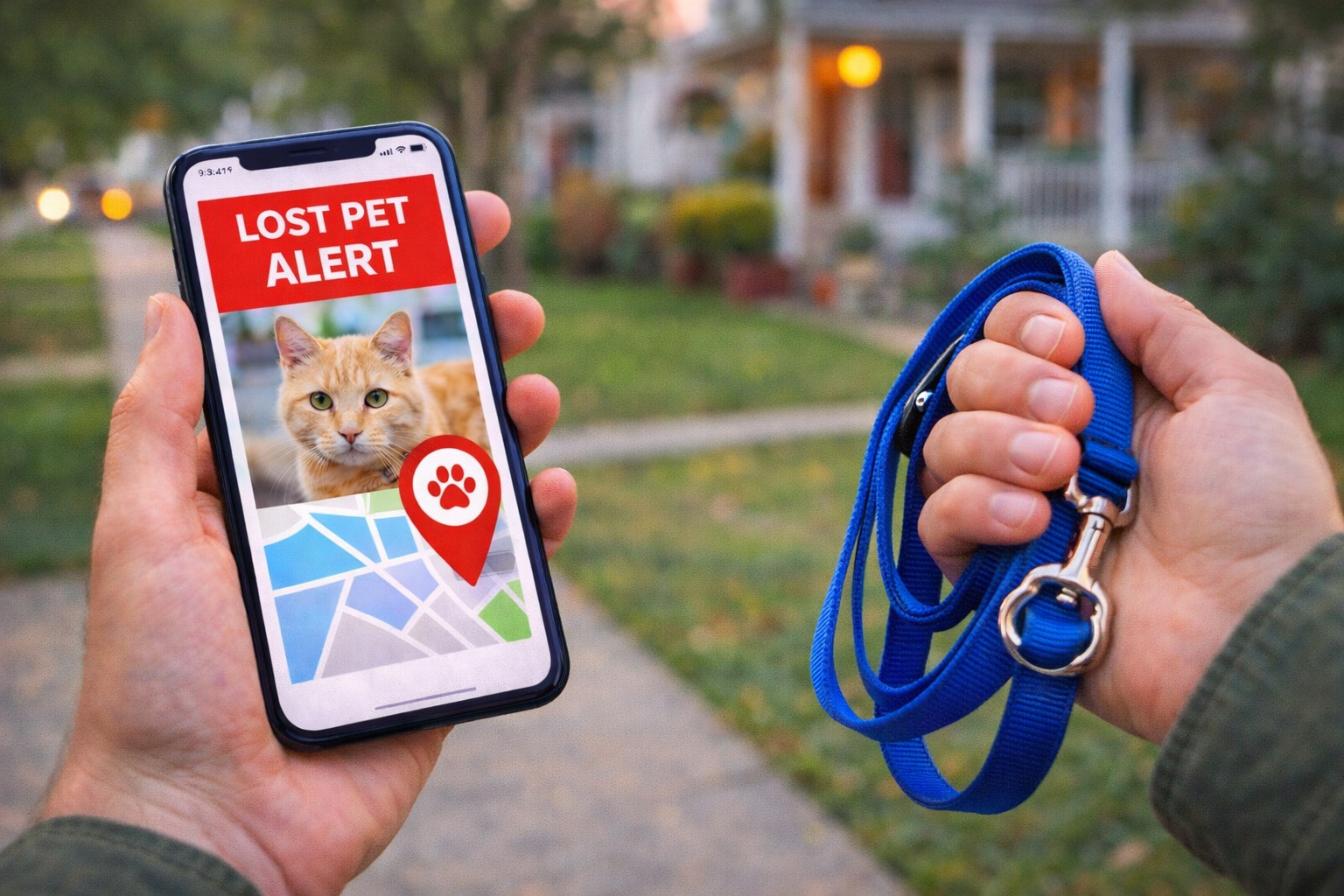
Lost Pet Quick-Action Guide

Immediate steps to take, what details matter most, and how alerts help mobilize your local community faster—plus safety tips and scam red flags.

Lost & found Alerts Safety Read time: ~7–10 minutes
A lost pet recovery moment: an owner preparing a clear flyer and checking locations safely
Back to Blog
Goal: Act fast, share accurate details, and recover safely. The first hour is usually the highest-leverage window.

First 30–60 minutes: do this now

Start where your pet was last seen and work outward in short loops. Most pets are closest to the last-seen area early on, especially if they are scared. Move quickly, but stay calm—chasing often pushes pets farther away.
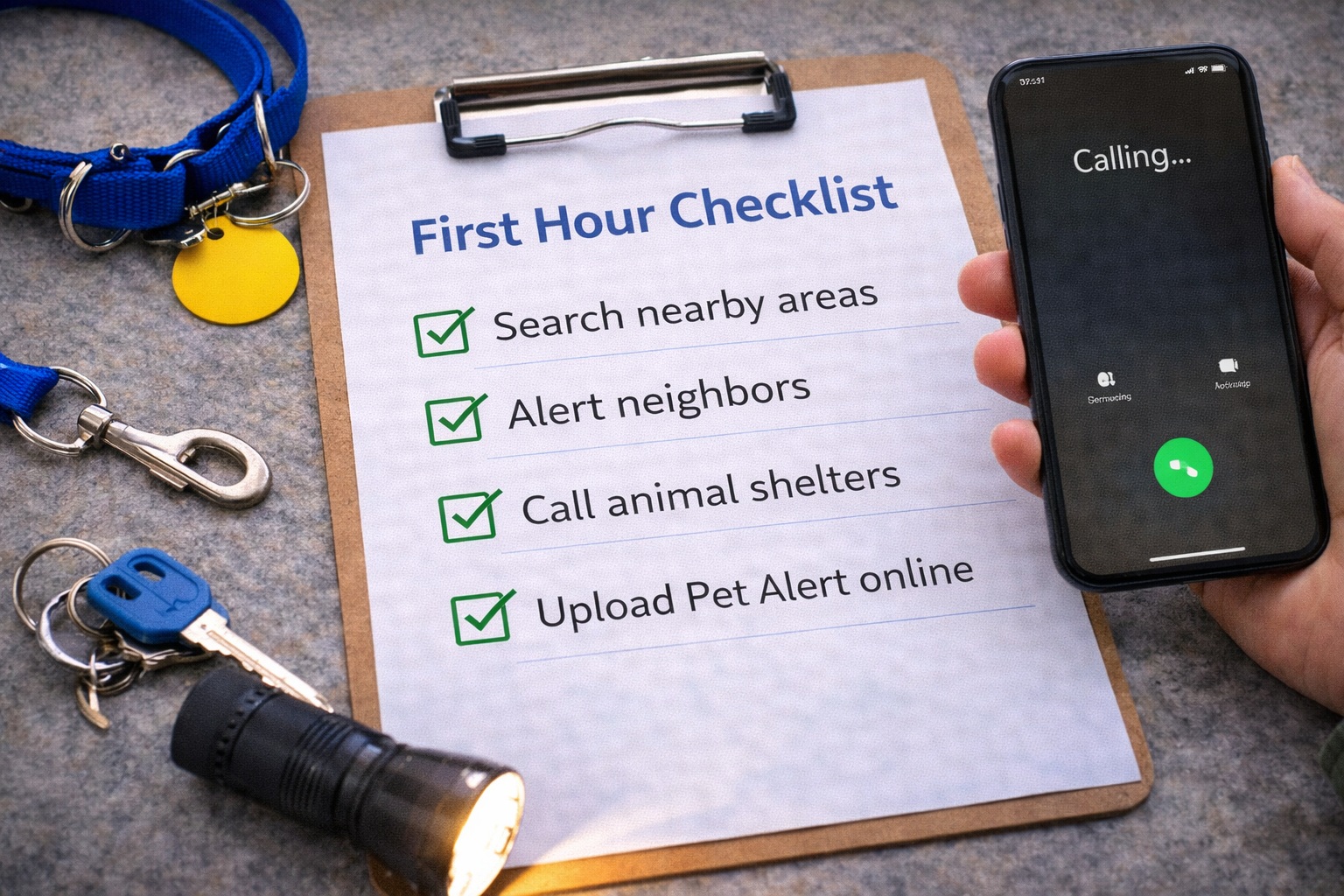
Search in loops (10–15 minutes each) Start at the last-seen point, then expand outward street by street or building by building.
Bring the right tools Leash/carrier, treats, a favorite toy, flashlight, and a familiar blanket or towel.
Check hiding spots immediately Bushes, under decks, garages, sheds, stairwells, behind dumpsters, and quiet corners.
Ask neighbors to check enclosed areas Pets can accidentally get trapped in garages, backyards, basements, or sheds.
If your pet is skittish: don’t chase Crouch low, speak softly, and use treats to guide. Chasing often triggers flight behavior.
A focused search effort near the last-seen area, showing calm, safe searching with a flashlight and treats
Move fast, but stay calm. Early search loops close to the last-seen point are often the most effective.

What to include in a lost pet alert (details that actually help)

A strong alert is short, specific, and easy to verify. Your goal is to help strangers identify your pet quickly and contact you safely. Avoid long stories—people share what they can understand in seconds.

Must-have alert fields

  • Clear recent photo: face + full body if possible (avoid dark, distant photos).
  • Species and breed/type: dog/cat/rabbit/bird/reptile, plus breed type if known.
  • Size and weight range: small/medium/large; approximate pounds helps a lot.
  • Color and unique markings: spots, scars, tail shape, ear notch, missing tooth, etc.
  • Collar/harness details: colors, tag info, leash/harness style.
  • Temperament: friendly/shy/skittish; “may run if approached.”
  • Last seen location + time: cross streets, neighborhood, and time window.
  • Contact method: phone + backup; “text preferred” helps screen scammers.
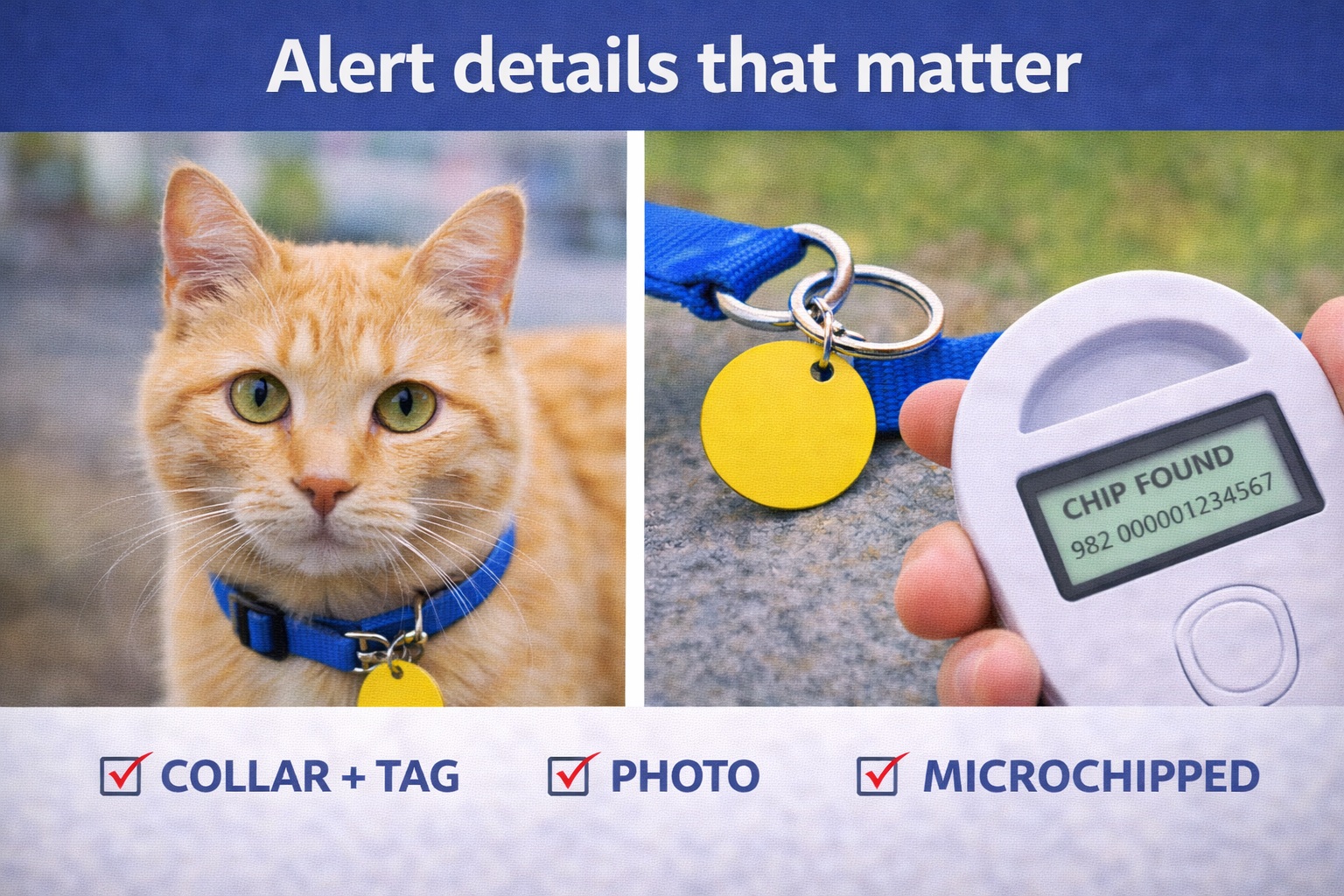
Tip: If you offer a reward, consider keeping it vague (“reward available”) to reduce scam attempts.
A clear lost pet alert layout showing the most important details: photo, last seen location, markings, and contact info
Strong alerts are short, specific, and easy for strangers to verify at a glance.

Search strategy matters as much as effort. Most recoveries happen when you combine targeted searching with clear community alerts. Use likely paths, “pull” locations (food/water), and quiet hiding zones.
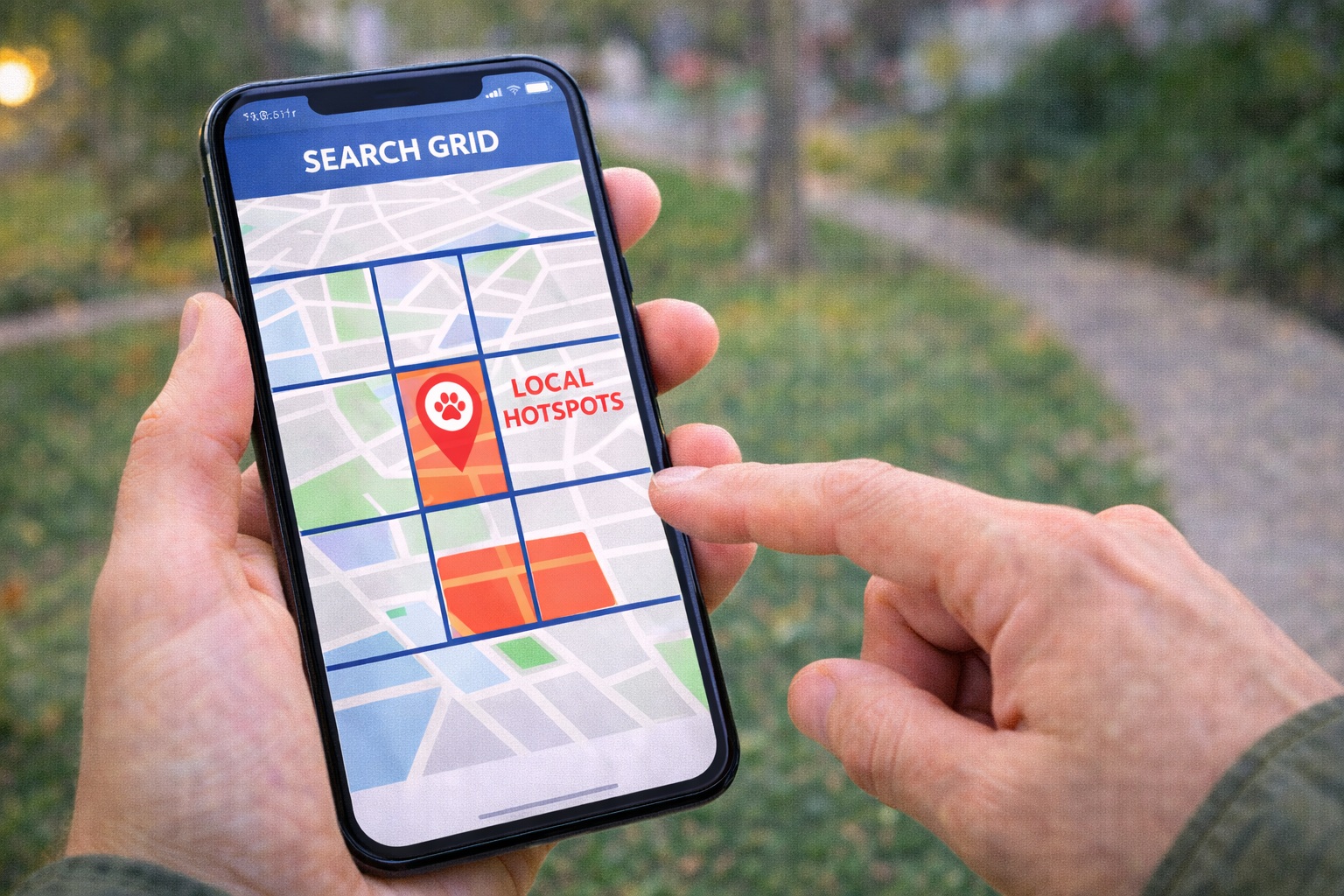
Start close, expand gradually Begin within a few blocks (or nearby buildings), then widen your radius systematically.
Focus on quiet hiding zones Under porches, bushes, behind buildings, parking lots, wooded edges, and alleyways.
Search at night for eye-shine (dogs/cats) Use a flashlight and scan low. Many pets move more at night when it is quieter.
Exotics: check warm and tight spaces Closets, vents, behind appliances, under furniture, near windows, and heat sources (carefully).
A search plan concept showing a last-seen point with expanding search loops and key locations to check
Work outward in planned loops and document sightings by time and location.

How alerts help mobilize your local community faster

You cannot out-search a neighborhood alone. Alerts multiply your reach by turning your community into extra eyes and ears. The key is to keep your information consistent and update one main post as sightings come in.

Where to post and share

  • BullyRoom Lost & Found: your primary hub for alerts and updates.
  • Neighborhood groups: local community pages, neighborhood apps, and group chats.
  • Shelters and rescues: notify nearby organizations (include the photo and last-seen details).
  • Veterinary clinics: ask to post your flyer or alert in their lobby.
  • Pet businesses: groomers, daycares, trainers—especially for dogs that follow familiar routes.

How to handle sightings

  • Ask for photo/video confirmation when possible.
  • Ask for exact location, time seen, and direction of travel.
  • Update your main post so shares always point to the newest info.
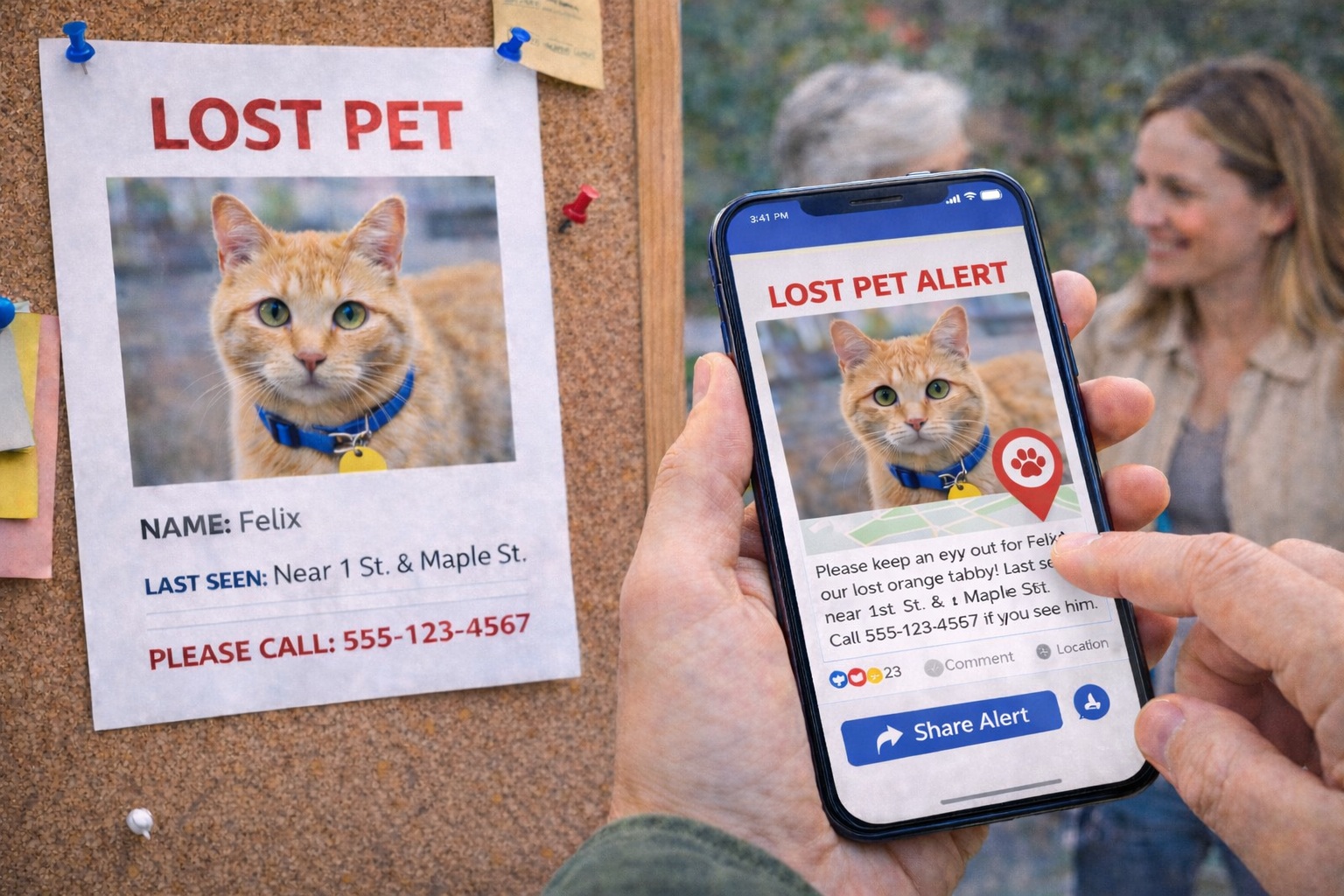
Community sharing concept showing a lost pet alert being shared safely across local groups and neighbors
Alerts multiply your reach and speed up recovery when the details stay consistent.

Flyers that work (simple beats fancy)

Flyers are still effective when they are readable from a car. Keep them simple and bold. Use one strong headline and one or two clear photos—avoid clutter.

Use a bold headline “LOST DOG” / “LOST CAT” / “LOST PET” in large letters.
Use 1–2 clear photos Face + full body is ideal. Avoid tiny collages or low-resolution images.
Include the essentials only Last seen area, markings, temperament, and contact info (plus a backup number).
Place flyers where people stop Intersections, parks, trailheads, community boards, stores, and neighborhood entrances.
A simple readable lost pet flyer design with a bold headline and a clear photo
Simple beats fancy: big headline, clear photo, and only the essential details.

If your pet is microchipped (do this immediately)

Microchips work only when the registration details are accurate. If your pet is missing, confirm registration details right away so shelters and clinics can reach you quickly.

  • Call the microchip registry and confirm your phone/email are correct.
  • Notify nearby shelters and veterinary clinics that a microchipped pet is missing.
  • If recently adopted, confirm the chip is transferred into your name.

Safe recovery steps (and scam red flags)

Recovery should be calm and safe. Always verify before meeting, and do not let urgency override your personal safety. Scammers often target lost pet owners because emotions are high.

Verify before you meet Ask for a photo/video or a unique marking detail only a real finder would know.
Meet in a public place Vet clinic lobby is ideal. Bring a friend and keep the meetup structured.
Use a leash/carrier immediately Secure your pet first, then handle paperwork or follow-up details.

Common scam patterns

  • “We found your pet—send a code” (verification code scams).
  • Demands for money before proof.
  • Refusal to share a location, time, or basic confirmation details.
  • Pressure tactics: “Pay now or you’ll never see them again.”
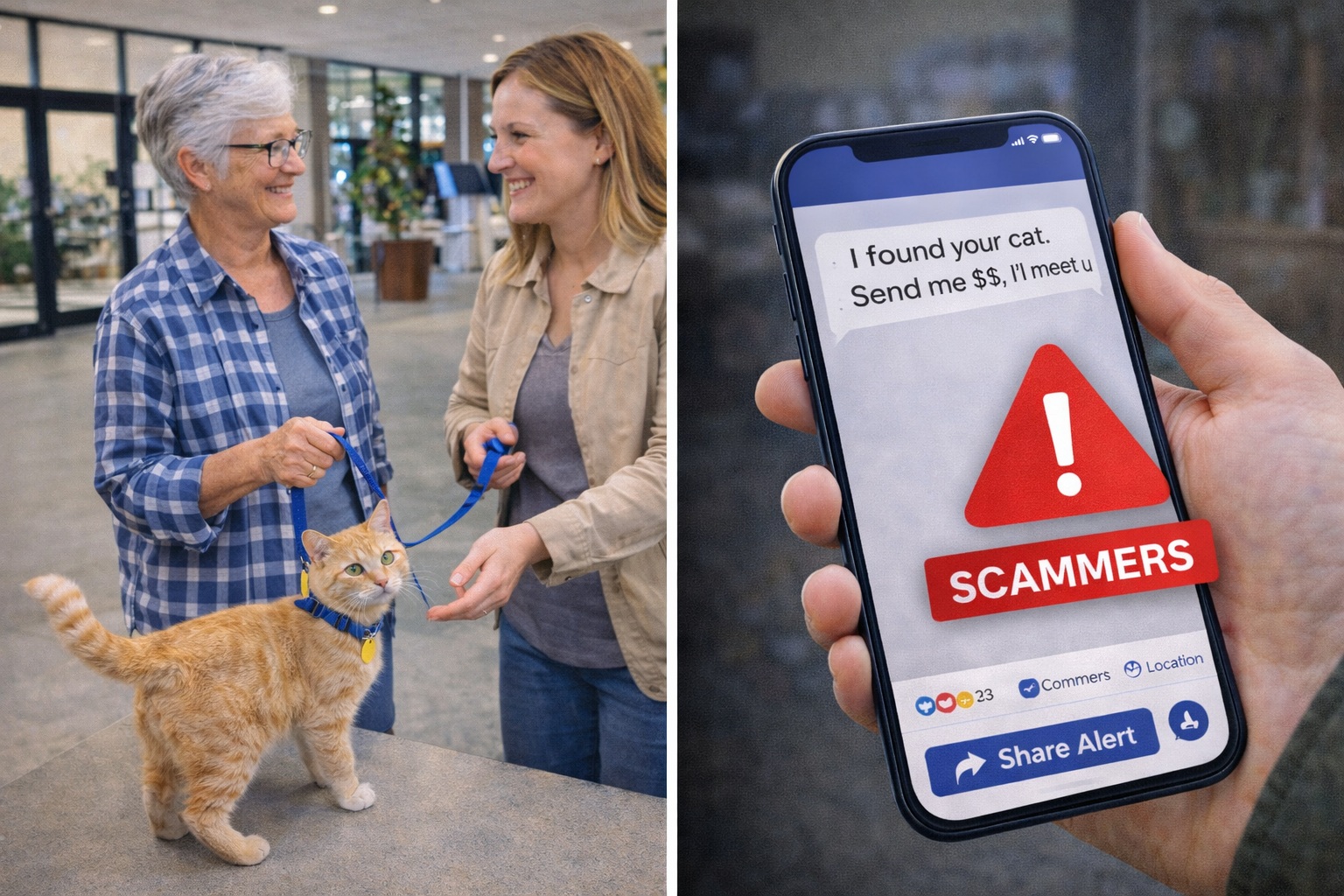
A safe recovery meetup concept in a public place with a carrier and calm handoff
Recover safely: verify first, meet public, bring help, and avoid code/money scams.

After you recover your pet (next 24–72 hours)

Once your pet is home, focus on health and prevention. Even short periods outside can cause dehydration, injuries, or exposure to pests.

Check health and behavior Look for limping, dehydration, lethargy, cuts, or unusual behavior. Consider a vet visit if anything seems off.
Update all alerts Mark posts as “FOUND” and thank the community so people stop searching.
Improve prevention Update tags, confirm microchip registration, check fences/doors, and consider GPS for high-risk pets.
Note: This guide is educational and not a substitute for veterinary care. If your pet is injured or unwell, contact a licensed veterinarian.

Quick summary

  1. Search the last-seen area immediately and expand in loops.
  2. Post a clear alert with photo, markings, and last-seen time/location.
  3. Use BullyRoom + local groups to multiply eyes quickly.
  4. Track sightings by time and location, and verify with proof.
  5. Recover safely: meet public, bring help, and avoid code/money scams.
  6. After recovery: vet check if needed and tighten prevention.
Back to Blog

Related articles

Adoption Checklist

Questions to ask, what to verify, and how to prepare your home for a smoother transition.

Read article

Responsible Breeding & Verification

How verification builds trust, reduces scams, and improves outcomes for pets and owners.

Read article
About the author:

BullyRoom Editorial Team publishes practical guides for safer pet adoption, rehoming, and responsible ownership across all species. Learn more about BullyRoom or contact support.