
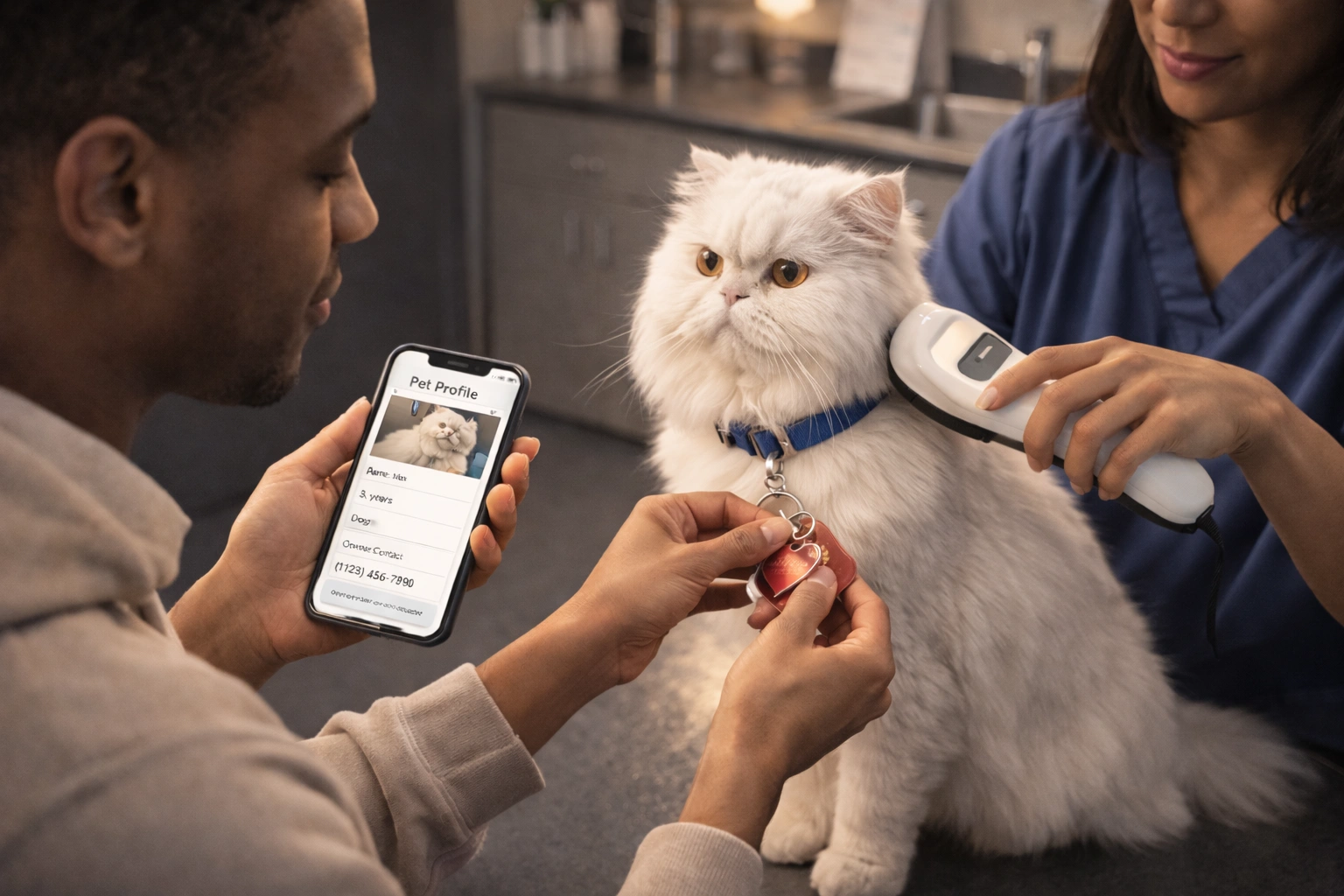
What actually works: the 3-layer system
The best recovery setup is not “microchip only.” It’s a layered approach that works in the real world: a stranger finds your pet, a shelter takes your pet in, or a vet clinic receives your pet. Each environment has different tools.
How microchips actually work (and why they fail)
A microchip is a small passive transponder that stores a unique ID number. A scanner reads the number, then a clinic or shelter looks up the number in a registry to find your contact information.
Here’s the key: the chip can be present and working perfectly—but if your registry record is outdated, you are effectively unreachable. That is the most common failure point.

Common reasons microchips “don’t work”
- Registry info is outdated: old phone number, old email, or a disconnected line.
- Chip was never registered: implanted but not linked to an owner record.
- Ownership transfer didn’t happen: common after adoption or rehoming.
- No backup contact: if you’re unavailable, there’s no second path to reach someone.
Microchip myths (quick reality check)
Microchips are one of the best safety tools available, but misinformation creates false confidence. A fast reality check helps you build a setup that actually works.

- Myth: “My chip is GPS.” Reality: chips are not GPS; they’re scanned for an ID number.
- Myth: “The vet updates it automatically.” Reality: you update your registry record.
- Myth: “The chip tracks my location.” Reality: a person must find the pet and scan the chip.
Why ID tags still matter (even if microchipped)
ID tags are the fastest path to recovery because they remove the need for scanners, registry databases, or intake processes. A good tag turns “lost pet” into a simple call or text.

What to put on the tag (simple and effective)
Prioritize reachability. In real recovery situations, the question is: can someone contact you quickly without guessing?
- Pet name (optional but helpful)
- Two contact methods (two phone numbers, or phone + email)
- “Text preferred” (reduces missed calls and helps you screen scammers)

Digital profiles (fast verification and better communication)
Digital profiles help when the situation becomes public: sightings, posts, shares, and community alerts. A strong profile reduces false sightings and lets helpers verify quickly.

What happens when your pet is found (two common paths)
Most recoveries follow one of two paths. Designing your setup around both is how you improve odds.

Path A: Finder contacts you (best case)
- Finder reads tag → calls/texts → you respond → safe handoff.
Path B: Shelter/vet scans chip (common)
- Pet brought in → chip scanned → registry lookup → shelter/vet contacts you.
The update checklist (do this today)
If you only do one thing after reading this article, do this. Outdated contact info is the #1 reason recoveries slow down.

Safety: avoid lost-pet scams (quick rules)
Lost-pet scams target stressed owners. Set a simple safety policy before you ever need it.
- Do not share verification codes. No legitimate finder needs them.
- Do not pay before proof. Ask for photo/video or a unique marking detail.
- Use a public meetup (vet clinic lobby is ideal) and bring help.

FAQ
Is a microchip required?
Requirements vary by location and organization. Even when not required, microchipping is widely recommended as a recovery tool because it provides a durable ID that cannot be easily removed like a collar.
Can I rely on a digital profile only?
Digital profiles help a lot, but they don’t replace tags or chips. They work best as the “verification layer” once a situation becomes public.
What’s the best setup for exotics?
Use enclosure/carrier labels, updated digital profiles with clear photos and care notes, and keep vet/exotic specialist contact information handy.
Quick summary
- Use a layered system: visible ID + microchip registry + digital profile.
- Microchips work when the registry contact info is current and reachable.
- ID tags are the fastest path to recovery for most “finder” situations.
- Digital profiles help verify sightings and reduce confusion and scams.
- Update phone/email and add an emergency contact.
Related articles
BullyRoom Editorial Team publishes practical guides for safer pet adoption, rehoming, and responsible ownership across all species. Learn more about BullyRoom or contact support.